
Uncategorized
What are compostable pads?
If you prefer disposable pads or liners but are looking for a more eco-conscious solution, compostable pads and liners might be the way to go. Learn all about them in this blog.
Author Sanature 04 Oct 2023Your menstrual cycle is something completely natural. But what are the effects on nature, when you’re menstruating? Nowadays, there are plenty of eco-conscious period products to choose from: reusable menstrual cups, 100% cotton tampons, period undies and compostable pads and liners. Let’s talk about the latter option. How do they work exactly? Can you really toss your compostable pads and liners into the compost? (short answer: yes). And how do you know if compostable period products are something for you? Learn it all in this explainer.
Compostable pads and liners?! How do those work?
As their name suggests, compostable pads and liners are period products that biodegrade after you’ve tossed them – they usually do so within half a year. To compare, synthetic pads and liners can take between 500 and 800 years to decompose.

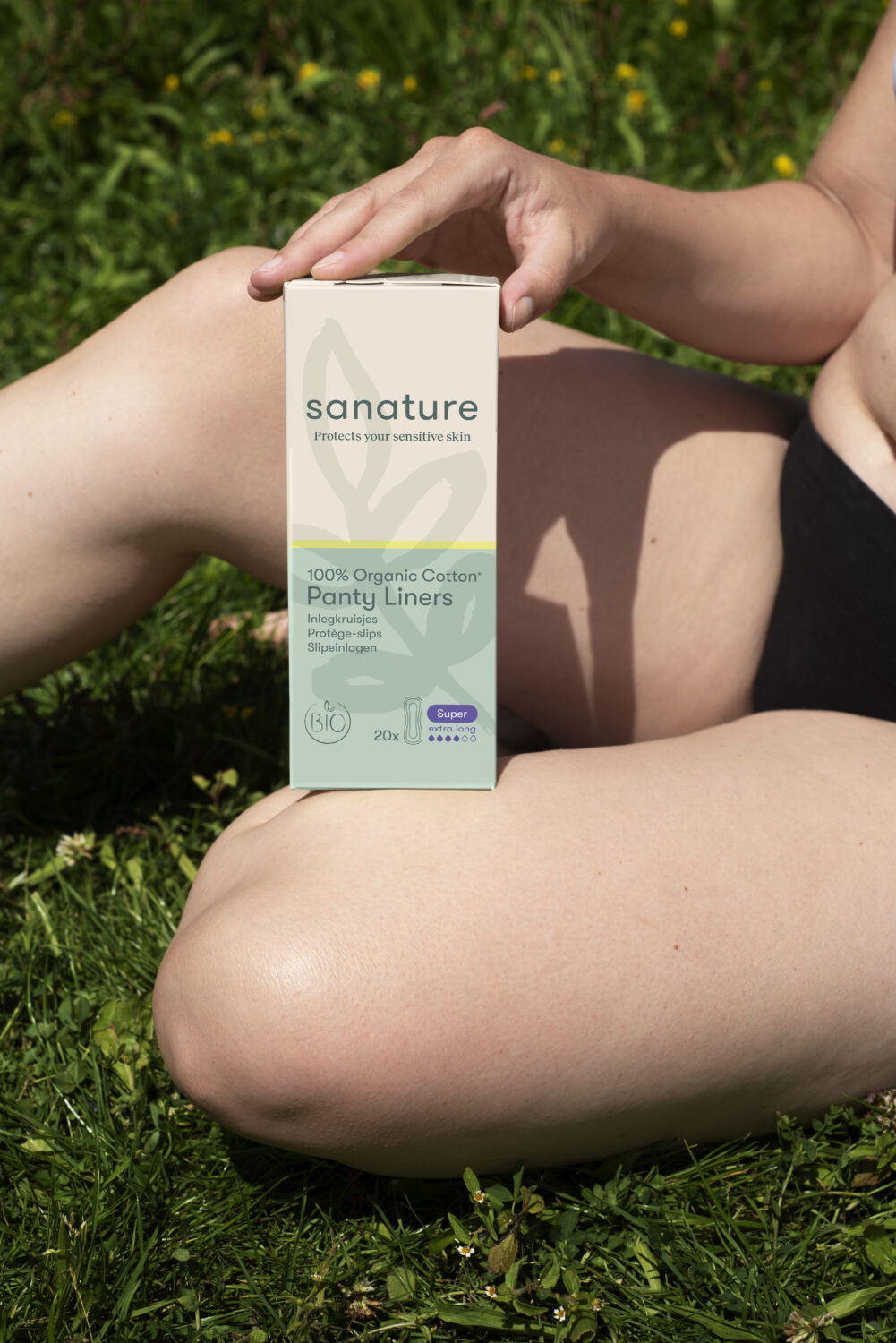
On their packaging, compostable pads and liners are sometimes called ‘biodegradable pads and liners,’ because, well… they are. If your pads are compostable, they’re also biodegradable – but not the other way around. To be titled ‘compostable,’ a product has to meet strict requirements (like speedy biodegradability and a lack of dangerous substances). The pads and liners in our Sanature Bio line are completely compostable (they naturally decompose in 3 to 5 months). On top of that, they’re leak-proof, chemical-free, ridiculously soft and great at preventing skin irritations. In other words: they’re great for you and for the planet.

What’s in a compostable pad?
In the case of our Bio pads and liners, we can totally do an ingredient deep-dive. Get acquainted with our pads, from organic cotton topsheet to sustainable packaging.

- GOTS-certified organic cotton topsheet
The topsheet is the layer of a pad directly touching your skin. In our Bio line, they’re made of 100% GOTS-certified organic cotton – making them soft, natural and chemical-free.
- 100% cotton core
A pad or liner’s core is the part that absorbs your period blood. In both our Bio products and our other period products, the core is 100% GMO-free cotton. This keeps your skin dry and irritation-free, without needing added chemicals, perfumes or absorbents. Just like bio cotton, regular cotton decomposes in a week to five months.
- Compostable plastic backsheet
A backsheet prevents period blood from leaking out of your pad and onto your clothes. Those in our Bio line are made of GMO-free cornstarch – making them just as leak-proof and breathable as the backsheets in our Sensitive line, but completely biodegradable. Decomposing takes about 90 days.
- Cardboard or I’m Green™ Bio-Based plastic packaging
Our compostable liners are packaged in a cardboard box, whereas our pads come individually wrapped in compostable wrappers (so they’re easy to carry in your bag). Those wrappers then come packaged in an I’m Green™ Bio-Based plastic bag (made of at least 40% cane sugar).
Do compostable pads feel different from normal pads?
Although you use them in exactly the same way, you might feel some (positive) changes when comparing compostable pads to normal, synthetic pads – especially if you’re not familiar with 100% cotton period care yet. Because natural, cotton pads and liners (found in our Bio line and Sensitive line) are incredibly soft and breathable, you’re less likely to get a sweaty crotch or skin irritation. You can learn more about cotton period care here.
The big difference? Disposing of them! Compostable pads and liners are best tossed in your organics bin. We recommend placing a small, dedicated bin next to your toilet. Regular pads and liners go into your regular bin. That seems obvious, but pads and liners are often flushed down the toilet – which can have detrimental effects on oceans and beaches. Synthetic, single-use period products are now the 5th most common disposable plastic item found on Europe’s beaches.
How do I know if compostable pads are something for me?
Considering you’ve read this explainer to the end, chances are you’re interested in compostable pads. Although they’re great for lots of reasons, here are some signs they might be a good solution for you:
✅ You care about menstrual sustainability yet prefer to use disposable pads or liners.
✅ You’re looking for a more sustainable solution to accompany your reusable period products (like, maybe you prefer to wear period undies with a liner – or a cup during the day and a pad at night).
✅ You have sensitive skin or often get yeast infections.
Sources:
Worn: A People’s History of Clothing, Book by Sofi Thanhauser
Global Organic Cotton Standard
Unicef: Technical Specifications for Disposable Sanitary pads
Science Direct: Sanitary Napkin
C&EN: What’s in period products?
Femcare Answers: ingredient glossary
Journal of Gynaecology and Obstetrics: Menstruation: Environmental impact and need for global health equity